
Man of the House Screenshots








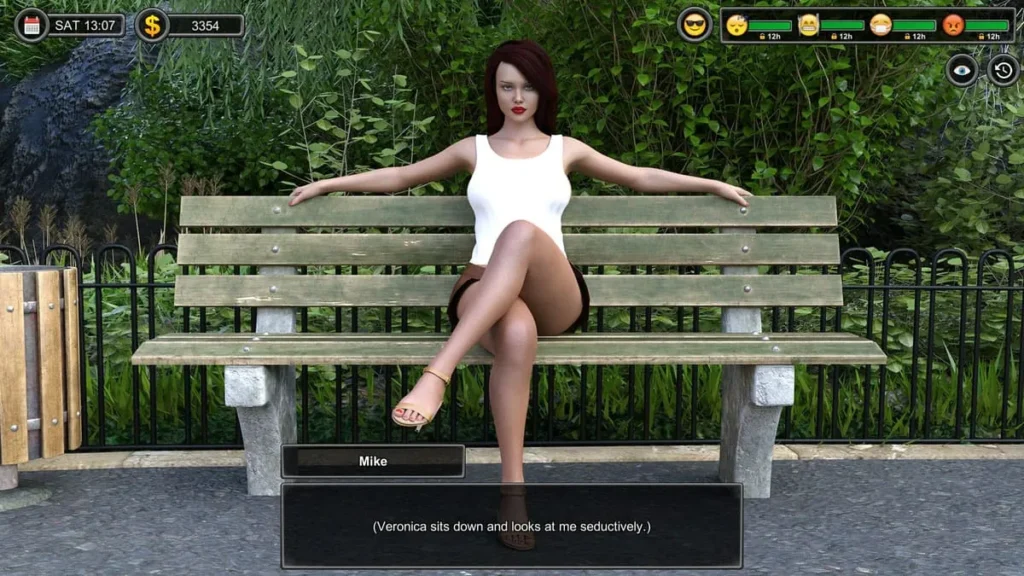
Man of the House review
Master every storyline, unlock all achievements, and maximize character relationships
Man of the House is a complex narrative-driven simulation game that challenges players to navigate intricate relationship dynamics and decision-making systems. This guide provides everything you need to understand the game’s mechanics, optimize your playthrough, and unlock all available content. Whether you’re a newcomer exploring the game for the first time or an experienced player seeking to achieve 100% completion, this comprehensive resource covers character interactions, progression systems, timing mechanics, and strategic choices that shape your gameplay experience. Learn how to balance multiple storylines, manage character stats effectively, and discover the consequences of your decisions throughout the game.
Understanding Game Mechanics and Core Systems
Ever felt like there just aren’t enough hours in the day? Welcome to the Man of the House experience 😅. This isn’t just a story you passively watch; it’s a life simulator where your most precious resource is time, and how you spend it directly writes your unique narrative. Mastering the Man of the House game mechanics is the difference between unlocking a fulfilling, complete story and stumbling through a confusing, half-finished mess. Think of this chapter as your blueprint—we’re going to dissect the clock, decode the stats, and map out the consequences so you can play with purpose.
I learned this the hard way on my first playthrough. I spent weeks (in-game time, thankfully!) just doing whatever felt fun in the moment—chatting with one character constantly, ignoring others, and wasting evenings watching TV alone. I hit a wall where storylines just… stopped. No new scenes, repetitive dialogue. I was locked out of content because I hadn’t managed the core systems. Don’t make my mistake. Let’s get you in control from day one.
How Time and Scheduling Work in Man of the House
The heartbeat of the Man of the House game mechanics is its relentless, ticking clock 🕐. Each day is divided into four distinct blocks: Morning, Afternoon, Evening, and Night. Once a time block passes, it’s gone forever in that playthrough. This creates the game’s defining challenge and its strategic depth: time management gameplay.
You can typically perform one significant action per time block, like visiting a location to interact with a character, working out to increase your physique, or taking a job to earn money. Locations and characters are only available at specific times. For example, someone might be in the kitchen in the morning but at the mall in the afternoon. Memorizing or noting these schedules is your first step to efficiency.
Here’s the golden rule: Time is a currency more valuable than money. Spending an afternoon with one character is an afternoon you cannot spend raising a stat or advancing a plot with someone else. This is where planning is essential. Do you focus on deepening a single relationship, or spread your attention to keep multiple storylines simmering? The time management gameplay loop forces you to make these interesting, consequential choices daily.
Pro Tip: Early on, use a few days purely for reconnaissance. Visit every location in each time block just to see who is where. This intel is priceless for future planning.
To master your daily schedule, here are some actionable optimization tips for maximizing interactions and stat gains:
- Prioritize Time-Sensitive Events: Some story events or special interactions are only available on specific days or within a small window. If you get a hint about something happening, prioritize it!
- Chain Actions Logically: Plan routes that make sense. If a character is in the park in the afternoon and usually goes home for the evening, interacting with them in both blocks can sometimes trigger continuous dialogue.
- Balance “Investment” and “Maintenance”: Some characters need constant attention to progress, while others have slower-burn stories. Learn which is which, and maintain lower-priority relationships with occasional interactions to prevent regression.
- Don’t Neglect Your Stats: Schedule blocks for self-improvement. Need more money for gifts? Work a job. Need higher physique for certain events? Hit the gym. These are investments that unlock future options.
Character Stats and Relationship Progression Explained
Now, let’s talk about the engine underneath the story: the character stats progression system. This isn’t just about watching numbers go up; these stats are literal keys that unlock doors within the game’s narrative 🔑. Every major character has three primary metrics you influence: Love, Arousal, and Submission.
Each of these stats operates on a scale, and reaching specific stat thresholds is what triggers new scenes, special dialogues, and pivotal story choices. It’s a gatekeeping mechanism that ensures the story progresses logically. You can’t jump to an intimate, trusting conversation without first building a foundation of Love and rapport.
The following table breaks down these core stats, their general effects, and how they influence your relationship progression guide.
| Stat | What It Represents | Primary Influence & Unlocks | Key Consideration |
|---|---|---|---|
| Love 💖 | Emotional connection, trust, friendship, and romantic affection. | Unlocks deeper, more personal conversations, dates, and emotional story milestones. High Love is often required for “relationship” paths. | The foundational stat for most storylines. It opens up new interactive options and makes characters more receptive to you. |
| Arousal 🔥 | Physical attraction and sensual tension. | Unlocks more flirtatious dialogue options, intimate scenes, and physical interactions. Necessary for advancing romantic and physical aspects of relationships. | Must often be balanced with Love. A very high Arousal with low Love might lead to different outcomes than a balanced approach. |
| Submission 😳 | A character’s willingness to be led, to follow suggestions, or to engage in dominant/submissive dynamics. | Unlocks specific story branches where you take a more leading role. Allows you to suggest activities or make choices for the character. | Highly character-dependent. Some characters have rich story content behind this stat, for others it’s less relevant. Observe their reactions closely. |
Your character stats progression system goal is to strategically raise these metrics through your choices. A compliment might raise Love. A flirtatious comment might raise Arousal. A confident or leading choice might raise Submission. However, it’s rarely one-size-fits-all! A comment that raises Submission for one character might lower it for another. Paying attention to their individual personalities is crucial for an effective relationship progression guide.
This system directly answers “how to balance multiple relationships.” You can’t max out everyone simultaneously due to time constraints, so you must decide whose stats to prioritize based on the story arcs you want to see. It’s a constant juggling act, which is where your time management gameplay plan comes back into play.
Making Strategic Choices That Impact Your Playthrough
This is where your playthrough becomes truly unique. Man of the House is built on a web of cause and effect. Every meaningful choice you make—from a simple dialogue pick to a major story decision—ripples outwards, altering your path. This decision consequences walkthrough section is about thinking ahead.
Choices can have several types of consequences:
1. Immediate Stat Changes: The most direct effect.
2. Flag Setting: The game quietly notes you did “X.” Much later, a check for flag “X” will open or close a path.
3. Point of No Return: Major decisions that permanently close off an entire storyline or character path in favor of another.
My “failed” first playthrough was a masterclass in unintended consequences. I focused solely on one character, ignoring her family almost entirely. When a critical, multi-character event happened later, I hadn’t built the necessary relationships with the others. The event played out in the worst possible way, permanently souring my relationship with two characters and locking me out of their content. I had to live with that for the rest of the game. That’s the power—and peril—of the decision consequences walkthrough mindset.
To strategically navigate this, you need to understand stat thresholds unlocking content. Reaching, for example, 50 Love with a character might unlock a special evening event at their location. Choosing to be supportive in that event might raise it to 60 and unlock a weekend trip option, while choosing to be selfish might cap it at 55 and end that branch. The game constantly checks your stats and your past choices to determine what you get to see next.
So, how to balance multiple relationships strategically?
* Identify Primary and Secondary Targets: Choose 1-2 characters for your “main” focus, and 2-3 as secondary. Spend your prime time blocks (evenings, weekends) on your primaries, and use leftover slots to maintain secondaries.
* Synergize Your Actions: If two characters are often in the same location (like the house), you can sometimes interact with both in a single time block, being efficient.
* Gifts Are Your Friend: Once you have money, gifts can be a fantastic way to boost stats with a character without spending a full time block, freeing you up for other tasks.
* Save Before Major Decisions: This is non-negotiable for a completionist. Before any big story moment, save in a new slot. This lets you explore different outcomes and see the decision consequences firsthand without replaying dozens of hours.
Mastering the Man of the House game mechanics is about embracing this interconnected dance. Your schedule fuels your stat progression. Your stats unlock the choices you can make. Your choices determine every relationship and every scene you experience. Plan your time, understand the metrics, and choose with the future in mind. Do that, and you’ll transition from a confused housemate to the true master of your story 🏆.
Man of the House offers a rich, choice-driven experience where every decision shapes your journey through interconnected character storylines. By understanding the game’s time-based mechanics, stat progression systems, and consequence framework, you can craft a playthrough that aligns with your preferred narrative outcomes. Whether pursuing 100% completion or exploring specific character routes, the strategic depth of relationship management and timing creates a uniquely personalized experience for each player. Use this guide as your roadmap to unlock all content, discover hidden interactions, and fully appreciate the complexity of the game’s branching narrative design. Your next playthrough awaits—approach it with intention and watch how your choices ripple through every aspect of the game world.