Summer’s Gone
Play Summer’s Gone
Summer’s Gone Screenshots














Summer’s Gone review
A Deep Dive Into This Award-Winning Interactive Visual Novel
Summer’s Gone Season 1 stands out as a high-quality interactive visual novel that prioritizes storytelling, character development, and emotional resonance over typical adult game conventions. This game follows a young man dealing with depression and isolation as he embarks on a journey of healing, hope, and love. With stunning visuals, deeply crafted characters, and exploration of essential topics like mental health and personal growth, Summer’s Gone has captured the attention of players seeking meaningful narratives. Whether you’re curious about the gameplay mechanics, character relationships, or the themes that drive the story, this guide explores everything you need to know about this compelling visual novel experience.
Understanding Summer’s Gone Season 1: Core Gameplay & Story
Let’s be honest—when you hear “interactive visual novel,” a few things probably spring to mind. Maybe it’s a lighthearted school romance, a fantasy adventure, or something… spicier. But what if a game came along that completely rewired those expectations? What if it asked you to sit with discomfort, to navigate the quiet chaos of a shattered mind, and to find connection not through grand gestures, but through fragile, honest moments? 🤔
That’s the territory Summer’s Gone boldly claims. It’s not just another title in your library; it’s an experience that lingers. This award-winning project has captivated players not with flashy action, but with profound emotional depth. So, what’s the secret? Let’s pull up a chair and dive into the heart of Summer’s Gone Season 1 gameplay, its groundbreaking story, and the mechanics that make every choice feel like a heartbeat.
What Makes Summer’s Gone Different From Other Visual Novels
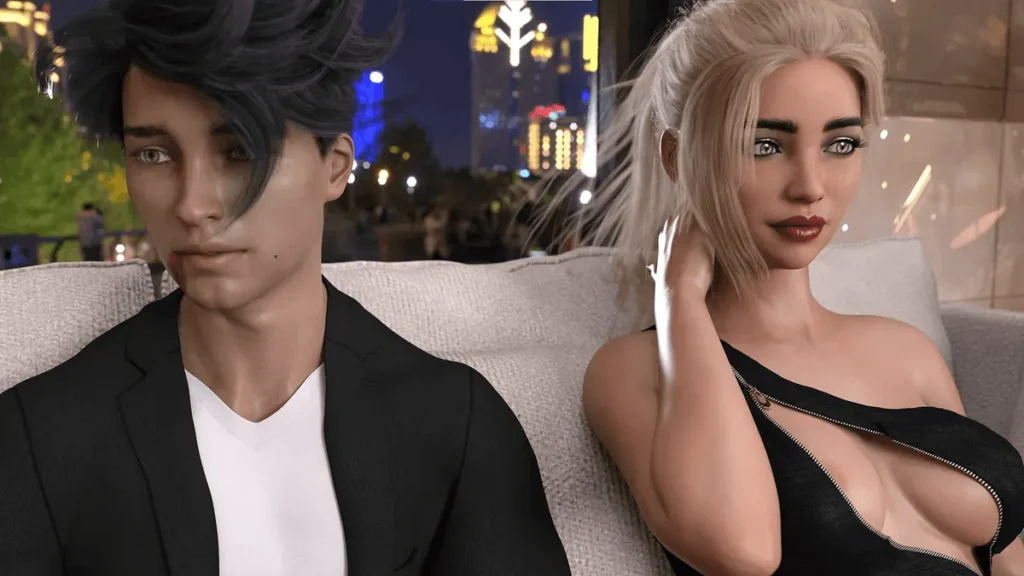
Right from the start, Summer’s Gone makes its intentions clear. It throws out the standard playbook. Forget the trope of the instantly charismatic, socially adept protagonist. In its place, we get William—or as you’ll know him, the hollowed-out young man we simply call “MC.” His world isn’t bright and welcoming; it’s muted, heavy, and defined by a profound absence.
The most striking departure is the game’s core focus. While many narrative-driven games use romance or fantasy as a primary engine, Summer’s Gone uses character development as its foundation. The relationships, the slow-burn dating sim visual novel elements—they are not the destination, but a potential outcome of a much more critical journey: healing. The game posits that before you can truly connect with others, you must first confront the person you’ve become. 🧩
This is reflected in every aspect of its production. The visuals are cinematic and somber, with a color palette that feels like a perpetual, overcast afternoon. The soundtrack is melancholic and ambient, amplifying the sense of isolation rather than breaking it. The pacing is deliberately slow, allowing you to sit in the silence of an empty apartment or the awkward tension of a strained conversation. This isn’t escapism; it’s immersion into a specific, fragile state of being.
Furthermore, Summer’s Gone famously sidesteps the explicit content that often defines the adult visual novel space. Creator Ocean has consistently emphasized that the story and emotional growth of the characters take precedence. This commitment is so strong that it’s been announced that future seasons, including the upcoming Season 2, will maintain this focus on depth over sensationalism, building a narrative where intimacy is earned through shared vulnerability, not simply granted. This principled stand has garnered a dedicated fanbase who are here for the story, first and foremost.
The Main Character’s Journey: Depression, Isolation & Healing
To understand the Summer’s Gone story plot, you must first understand the protagonist. We meet him as a ghost in his own life. A traumatic event—the sudden, unexplained disappearance of his girlfriend, Summer—has severed his connection to the world. He’s dropped out of college, severed ties with friends and family, and exists in a self-imposed exile within his own apartment. This isn’t just “sadness”; the game meticulously portrays the symptoms of deep depression and complex trauma: the crushing apathy, the neglected surroundings, the overwhelming social anxiety, and the distorted self-perception. 😔
His re-entry into life isn’t a heroic choice, but a reluctant necessity. Forced to return to college, he is a stranger in a familiar place. Every social interaction is a minefield. A simple “How are you?” feels like an interrogation. This is where the Summer’s Gone mental health themes are not just background noise; they are the primary interface through which you experience the world. You feel his shame at being left behind, his loneliness in a crowd of peers, and his fundamental belief that he no longer fits into any “social template.”
The brilliance of the narrative lies in its refusal to offer quick fixes. Healing is non-linear. Some days, getting out of bed and attending a lecture is a monumental victory. Other days, a memory or a trigger can send him spiraling. The Summer’s Gone character development is measured in these small, fragile steps. It’s in the first genuine, unforced conversation. It’s in the decision to clean a single room. It’s in the terrifying risk of trusting someone with a piece of your broken history.
The characters he meets become mirrors and anchors. Some, like the stern but caring coach, offer tough love and structure. Others, like the various young women he encounters (Bella, Nami, Sasha, and more), represent different paths and possibilities for connection. Each relationship explores a facet of healing—whether it’s through quiet understanding, chaotic energy, shared pain, or challenging his isolation. Love and romance are potential outcomes, but they are framed as byproducts of mutual growth and overcoming obstacles together, never as a cure for his inner turmoil.
Key themes explored in Summer’s Gone:
* Depression & Trauma: The realistic portrayal of living with loss and mental illness.
* Shame: The deep-seated feeling of being broken or left behind.
* Loneliness: The paradox of being surrounded by people yet feeling utterly alone.
* Ambition: The struggle to reignite goals and a sense of purpose.
* Love & Connection: The risky, gradual process of opening up to others.
* Healing: The non-linear, arduous journey toward becoming whole again.
Interactive Choices & Their Impact on Your Story
This is where Summer’s Gone transforms from a story you watch into a story you live. The interactive visual novel mechanics are deceptively simple in presentation but incredibly deep in consequence. Every dialogue option, every silent decision to engage or withdraw, sends ripples through the narrative pond. This is the epitome of a game where visual novel choices matter, not just for a binary “good” or “bad” ending, but in shaping the very texture of your experience. 🎮
The choice system directly interfaces with the protagonist’s mental state. Will you push him to be social, risking anxiety for potential connection? Or will you protect him, allowing him to retreat into familiar solitude? There’s no obvious “right” answer. A choice that brings you closer to one character might inadvertently hurt another or reinforce the MC’s negative self-beliefs. For instance, choosing a self-deprecating joke might make Bella laugh, building a connection, but it also internally reinforces the MC’s low self-esteem.
The game employs a sophisticated branching narrative system that tracks your affinity with each major character in subtle ways. It’s not just a visible meter you can max out; it’s a hidden web of trust, shared moments, and perceived sincerity. A kind act performed for manipulative reasons may not yield the same result as a genuinely empathetic one. The game remembers your small kindnesses, your moments of cruelty, and your consistent patterns of behavior.
Example: How a Simple Choice Can Branch Your Story
| Scenario | Choice A (Withdraw) | Choice B (Engage Cautiously) | Choice C (Engage Boldly) |
|---|---|---|---|
| Bella, a intense and often hostile classmate, confronts you in the library. She accuses you of staring and disrupting her focus. | “Sorry. I’ll leave.” You mutter an apology, avoid eye contact, and quickly exit. This avoids conflict but confirms her negative view of you as weak and odd. It may close off her path for now. | “I was just zoning out. This place is… quiet.” You offer a half-truth, acknowledging her without aggression. This shows you’re not a threat and can handle her intensity without folding. It piques her curiosity slightly. | “Actually, I was wondering when you’d finally talk to me.” You meet her gaze and respond with unexpected, calm confidence. This completely flips the script, challenging her directly. It’s high-risk, potentially angering her further, but also the only choice that might earn a shred of her respect. |
| Potential Long-Term Impact | Bella’s route remains locked. Her future interactions stay cold and dismissive. The MC’s confidence stat may decrease. | Unlocks potential for future, slightly less hostile interactions. May lead to slower-burn, understanding-based connection later. A small increase in “Social Risk” stat. | This is a key gate for Bella’s route. It either starts a uniquely tense, push-pull dynamic or causes a permanent rift. Significantly affects the MC’s “Self-Assertion” stat. |
This example shows how the Summer’s Gone Season 1 gameplay isn’t about picking the “romance option.” It’s about deciding who the MC is in that moment. Is he the broken victim, the cautious observer, or someone trying to reclaim a sliver of his old spine? Each identity opens different doors and closes others, making every playthrough a unique reflection of the player’s own instincts.
The worldbuilding is fleshed out through these choices. The college campus, the local hangouts, and the character backstories are revealed piecemeal based on who you spend time with and what you ask. You’re not just reading a static world; you’re actively exploring the parts of it that your version of the MC is drawn to—or forced to confront.
Ultimately, Summer’s Gone Season 1 is a masterclass in emotional interactivity. It proves that the most compelling interactive visual novel mechanics are those that tie directly to the protagonist’s inner world. Your choices don’t just change a storyline; they chart a course through grief, fear, and the tentative hope of healing. It’s a game that stays with you, not because of what you saw, but because of the person you helped to become—or perhaps, the person you struggled to save from the depths. It’s a deep, often challenging, and ultimately unforgettable journey where every quiet choice echoes with meaning. ✨
Summer’s Gone Season 1 represents a significant evolution in interactive visual novels, proving that adult games can deliver compelling narratives, meaningful character development, and artistic excellence. By prioritizing storytelling over explicit content and exploring themes of mental health, personal growth, and human connection, the game has resonated with players seeking more depth from the genre. The exceptional visual design, unique character development, and branching narrative system create an immersive experience that rewards player engagement and emotional investment. Whether you’re drawn to the healing journey of the protagonist, the complex relationships with diverse characters, or simply the artistic quality of the presentation, Summer’s Gone Season 1 offers a rich and meaningful experience. As the community anticipates Season 2 and continues to discuss the game’s impact, it’s clear that this visual novel has established itself as a standout title that challenges conventions and delivers genuine emotional resonance.